Introduction
Paolo Volpis Architects designs modern, minimal, and contemporary luxury homes using advanced construction methodologies including prefabricated, semi-prefabricated, and modular systems.
These approaches allow us to combine architectural clarity with precision engineering, delivering homes that are not only visually refined but also efficient, durable, and sustainable.
Rather than limiting design, these systems expand what is possible—enabling greater control, higher quality, and improved long-term performance.
What Is Prefabricated Architecture?
Prefabricated architecture refers to building components that are manufactured off-site and then assembled on location.
This process introduces a level of precision and efficiency that traditional construction methods often cannot achieve.
Key Advantages
- Improved Construction Precision
Components are fabricated in controlled environments, reducing inconsistencies and ensuring accurate assembly on site.
Off-site production allows for optimized material use, minimizing excess and improving sustainability.
- Faster Construction Timelines
Fabrication and site preparation can occur simultaneously, reducing overall project duration.
Controlled conditions result in better workmanship and more consistent structural performance.
- Greater Design Flexibility
Prefabrication supports complex modern forms that require precision and coordination.
Semi-Prefabricated Metal Architecture
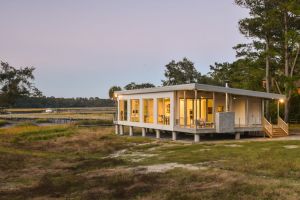
Our work focuses primarily on semi-prefabricated architecture, where structural systems—especially metal frameworks—are prefabricated while allowing full architectural customization.
This approach provides the ideal balance between design freedom and construction efficiency.
Why Metal Systems
Steel provides superior load-bearing capacity, making it ideal for large spans and open layouts.
Metal components can be manufactured with high accuracy, supporting clean modern detailing.
Properly treated metal systems perform exceptionally well in demanding environments.
- Minimal Structural Expression
Metal allows for thinner profiles and cleaner architectural lines, aligning with minimal design.
- Adaptability Across Climates
Metal systems can be engineered to perform in coastal, desert, and alpine environments.
Modular Construction (Overview)
Modular construction is a related approach where entire building sections—or “modules”—are fabricated off-site and assembled on location.
While distinct from semi-prefabrication, it shares similar principles of efficiency, precision, and controlled construction.
How Modular Differs
Instead of individual components, entire sections of the home are built off-site.
Modules are transported and installed quickly, significantly reducing construction time.
Factory-built modules maintain high consistency across all components.
Modular construction allows for repeatable design logic, adaptable to different sites.
We approach modular construction with the same architectural discipline, ensuring that design quality is never compromised.
(A dedicated modular architecture page can expand on this further.)
Modern, Minimal & Contemporary Design
Prefabricated and modular systems naturally align with modern and minimal architecture, where precision and clarity are essential.
Design Principles
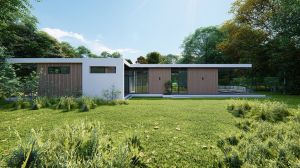
Straight lines and simple volumes create a timeless architectural language.
Controlled fabrication allows materials to meet cleanly without unnecessary complexity.
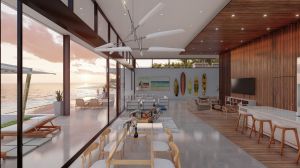
Structural efficiency enables flexible, open-plan living environments.
Minimal design eliminates excess, focusing on proportion and light.
- Integration with Landscape
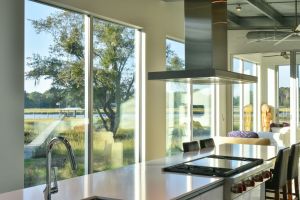
Architecture is designed to frame views and connect interior and exterior spaces.
Luxury Homes and Prefabrication
Prefabrication is increasingly used in high-end residential architecture because it enhances both quality and performance.
Benefits for Luxury Homes
- Higher Construction Accuracy
Precision fabrication ensures refined detailing expected in luxury homes.
- Improved Material Performance
Advanced systems deliver better durability and long-term value.
Architects can coordinate structure and aesthetics more effectively.
- Reduced Maintenance Over Time
High-quality fabrication leads to fewer long-term issues.
Every home remains fully tailored to the client and site.
Efficiency Through Design and Construction
Efficiency is embedded in both the design process and the construction method.
How Efficiency Is Achieved
- Integrated Design Approach
Architecture and construction systems are developed together from the beginning.
- Reduced Construction Time
Off-site fabrication shortens on-site build duration.
Materials and processes are carefully coordinated to minimize waste.
- Improved Build Coordination
Fewer variables on site lead to smoother execution.
- Long-Term Operational Efficiency
Homes are designed to perform efficiently throughout their lifecycle.
Sustainable Architecture
Sustainability is a natural outcome of intelligent design and controlled construction.
Sustainable Benefits
- Lower Environmental Impact
Reduced waste and optimized materials minimize ecological footprint.
High-performance envelopes improve thermal performance.
- Durable Construction Systems
Long-lasting materials reduce the need for replacement.
Prefabrication allows for better material planning and sourcing.
Homes are designed for long-term environmental efficiency.
Adaptability Across Environments
Prefabricated and modular systems are highly adaptable to different climates and regions.
Coastal Environments
- Resistant to salt air and humidity
- Designed for wind and storm conditions
- Supports indoor–outdoor living
Desert Climates
- Reduces solar heat gain
- Integrates shading and thermal control
- Uses durable materials for extreme conditions
Mountain Regions
- Engineered for snow loads and temperature variation
- Provides strong insulation and structural stability
- Performs reliably in alpine environments
Urban Settings
- Allows precise construction in tight sites
- Reduces disruption during building
- Supports contemporary architectural integration
The Design Process
Our process integrates design, engineering, and construction from the outset.
Process Overview
Defines the architectural vision based on site and client goals.
Incorporates prefabricated or modular systems into the design.
Structural components are engineered and manufactured off-site.
On-site work is executed with precision and efficiency.
The result is a modern, high-end residence built to perform.
Why Work with Paolo Volpis Architects
- Expertise in modern and contemporary architecture
- Deep knowledge of semi-prefabricated and modular systems
- Experience across diverse climates
- Focus on high-end residential design
- Commitment to efficiency and sustainability
We approach each project as a fully integrated system—where design quality and construction precision are inseparable.
Conclusion
Prefabricated, semi-prefabricated, and modular architecture represent the evolution of modern residential design.
By combining architectural clarity with advanced construction methods, we create homes that are:
- Visually refined
- Structurally intelligent
- Efficient and sustainable
- Built with precision
These systems are not alternatives to traditional architecture—they are tools for creating better architecture.